
01Where to look for a flat with a garden
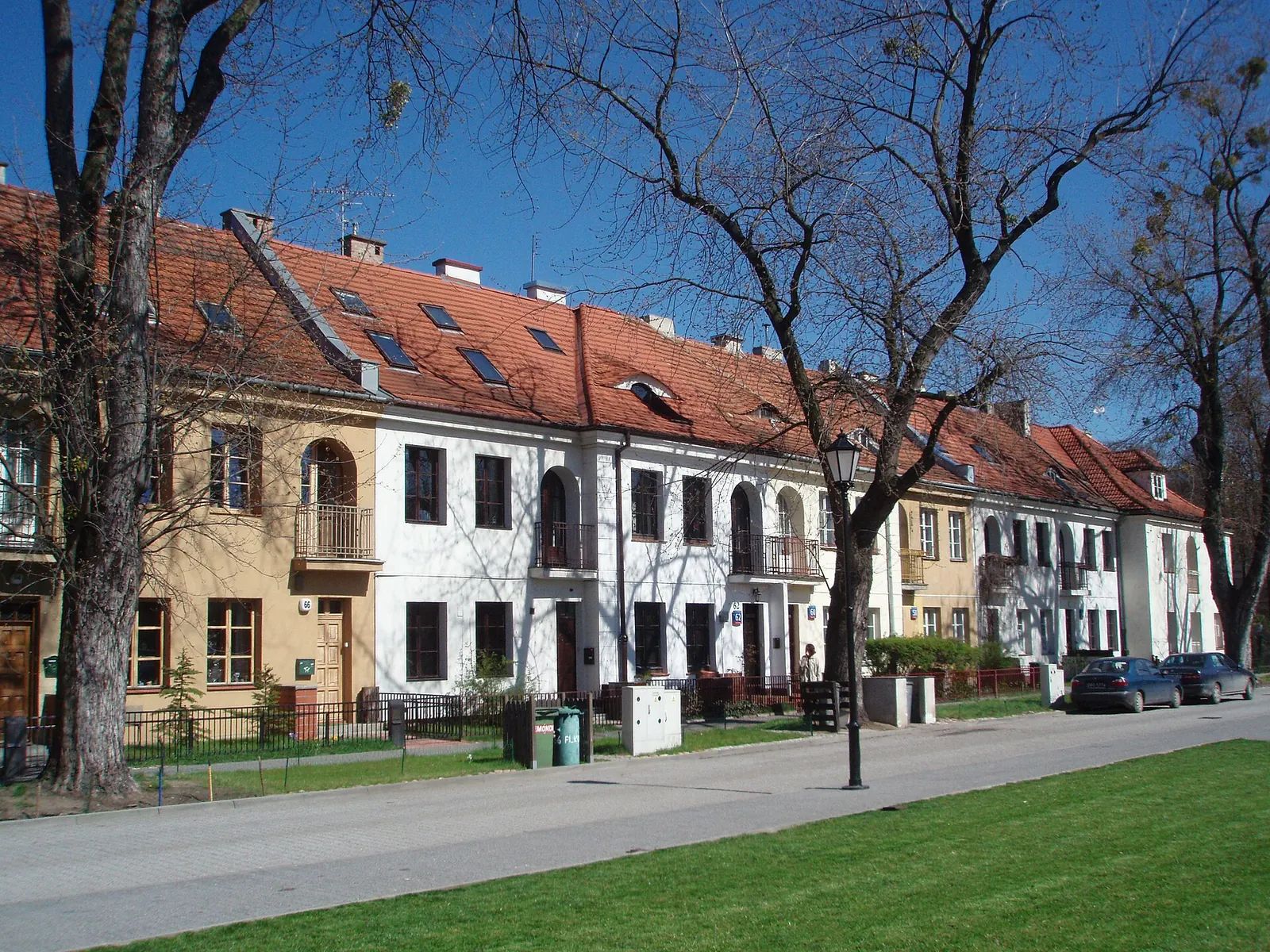
Private gardens are mostly a feature of developments built over the last twenty years, so you will find most of them where most new estates have gone up. In Białołęka, that means Nowodwory, Brzeziny, Tarchomin and Białołęka Dworska. In Bemowo, try Chrzanów and the areas around Lazurowa and Fort Bema. In Ursus, new estates are rising in Szamoty and on the former factory site near Ursus Północny station. Wawer has small low-rise blocks and terraced houses in Anin, Międzylesie and Marysin Wawerski, and in Wilanów garden flats turn up in Miasteczko Wilanów and the lower-rise housing towards Powsin. In older blocks and tenement buildings in the centre, they are rare.
02The upsides
The big advantage is your own outdoor space: room for a table, a sun lounger, an electric barbecue, or children playing where you can see them. It also suits dog owners — a garden is no substitute for a walk, but it makes daily life easier. Being on the ground floor means no stairs and no reliance on the lift, which matters with a pushchair or for older residents. A garden often brings extra light and a sense of space indoors, and if you work from home, somewhere to work outside in the warmer months.
03The downsides
Ground-floor living has its drawbacks too. Privacy depends on the hedge or fence — neighbours upstairs can see into the garden, and if it faces a pavement you will hear passers-by. Damp is more common, especially on walls against the ground and in buildings with poor ventilation, so check the corners and window frames. Security comes down to proper locks on the patio doors, shutters or bars, and contents insurance. Add insects, dust from building sites on estates that are still growing, and noise from a playground, bin store or car-park entrance if the garden backs onto one.
04The garden in your tenancy agreement
In a new building, the garden next to a flat is usually not separate property but part of the shared plot, with the flat owner holding an exclusive right of use. So the agreement should state that the garden is included in the let, who looks after it and how often (mowing, watering, trimming the hedge), and who pays for water from the outside tap. Read the building’s house rules (wspólnota) as well — they may restrict things like garden sheds, changing the fence or barbecues. Record the state of the garden, plants and patio with photos in the protokół zdawczo-odbiorczy (handover report).
05What a flat with a garden costs
Landlords usually charge more for a garden than for a similar flat higher up, but the premium depends on the size of the garden and the building, so there is no single figure. District rents are the starting point. By our estimates for autumn 2026, a two-room flat costs around 2,850 zł a month in Białołęka, 2,900 zł in Wawer, 3,100 zł in Bemowo, 3,150 zł in Ursus and 3,500 zł in Wilanów. Three rooms run to around 3,650–4,100 zł in Białołęka, Wawer, Bemowo and Ursus, and from 4,500 zł in Wilanów, where larger flats can cost noticeably more. The service charge (czynsz administracyjny) comes on top.
Housing estates
FAQ
Which Warsaw district is easiest for renting a flat with a garden?
Most listings are in the newer estates of Białołęka, Bemowo, Ursus, Wawer and Wilanów. In the centre and in older blocks, garden flats are rare.
Who looks after the garden in a rented flat?
Usually the tenant, but it depends on the agreement. Put in writing who mows the lawn, waters the plants and trims the hedge, and who pays for the water used in the garden.
Is a flat with a garden more expensive?
Usually, yes — compared with a similar flat on a higher floor. The premium depends on the garden’s size and the standard of the building; district rents are the benchmark.